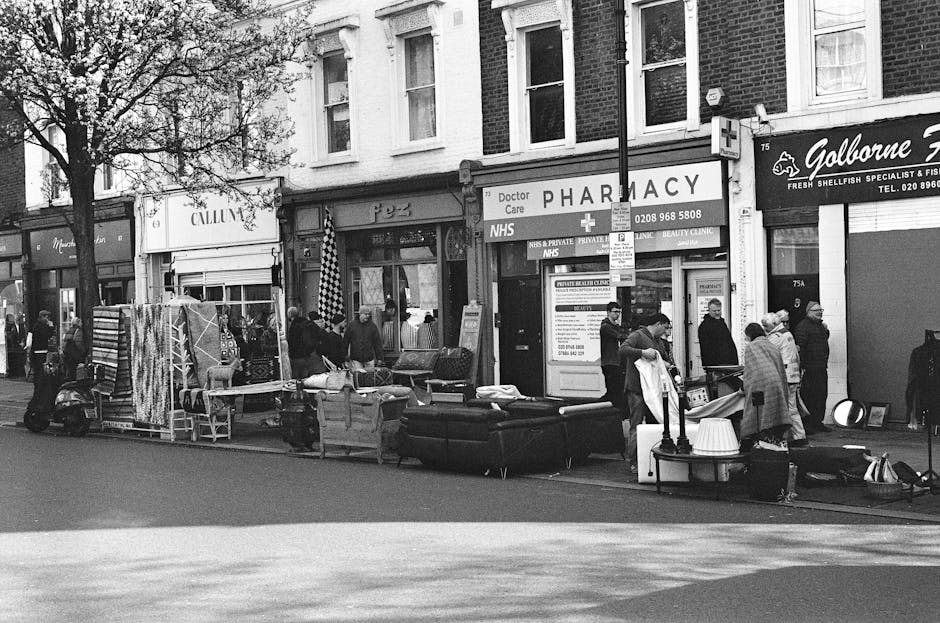
Lewisham Council bulky items: booking rules for New Cross

If you live or work in New Cross and you are trying to get rid of a sofa, mattress, wardrobe, or other awkward household item, the booking process can feel more confusing than it should. The good news is that Lewisham Council bulky items: booking rules for New Cross are usually straightforward once you know what counts as bulky, how to prepare the items, and what the council expects on the day. This guide walks through the practical side of it all, so you can book confidently and avoid the usual headaches: missed slots, items rejected at the kerb, or a collection that does not quite match what you had in mind.
Truth be told, bulky waste is rarely just about waste. It is about time, access, shared hallways, parking, neighbours, and whether that old bed frame is going to fit through a narrow stairwell without drama. Let's make it simple.
Why Lewisham Council bulky items: booking rules for New Cross Matters
Bulky waste rules matter because they shape how quickly you can clear space, what you can leave out, and whether your items will actually be taken. In a busy area like New Cross, where flats, terraces, converted houses, and shared entrances are common, a little planning saves a lot of back-and-forth. You may only be dealing with one item, but the practical details still count.
If the booking is done badly, you can end up with furniture sitting outside longer than expected, neighbours annoyed by blocked pavements, or a failed collection because the item was not prepared properly. That is not fun for anyone. On the other hand, a clean, well-planned collection feels refreshingly easy. One less thing hanging over your head.
For many residents, bulky collection is about more than convenience. It is also a way to stay on top of household safety, reduce clutter, and avoid leaving large items in communal areas where they become a trip hazard or an obstruction. If you are clearing a property completely, you may also find it useful to look at house clearance, flat clearance, or even furniture disposal if the job is bigger than a single collection.
Expert summary: the smartest bulky waste booking is not just about "getting rid of stuff". It is about checking eligibility, preparing items correctly, and matching the collection method to the reality of your property.
How Lewisham Council bulky items: booking rules for New Cross Works
The basic process is usually quite practical. You identify the item, check whether it can be collected as bulky waste, and then arrange the collection using the council's normal route. The exact booking steps can change over time, so the safest approach is always to follow the current council guidance rather than assuming last year's process still applies. That sounds obvious, but people do it all the time.
In general, bulky items are large objects that are too awkward for standard household refuse collection. Think sofas, chairs, tables, mattresses, wardrobes, cabinets, and similar household goods. Some councils also have specific rules around white goods, dismantled furniture, or items that may contain glass, electrical parts, or hazardous components. The important bit is not the category name alone, but whether the item matches what the collection service accepts.
In New Cross, property access can matter just as much as the item itself. If you live on an upper floor, in a converted building, or on a street where parking is tight, you may need to plan where the item will be placed and how crews can reach it. If you have limited access, a service like home clearance or furniture clearance may be more practical than trying to manage a difficult kerbside pickup.
It also helps to remember that council collections are usually designed for standard domestic quantities. If you have a full room of furniture, post-renovation debris, or mixed waste from a bigger project, it may be better to explore waste removal or builders waste clearance instead. Different jobs, different tools. Simple as that.
What booking rules usually focus on
- Eligibility: whether you live in the council area and whether the item qualifies.
- Item type: what can be accepted, separated, or refused.
- Presentation: how and where the item must be left for collection.
- Timing: the day, time window, and any lead time before collection.
- Limits: how many items can be booked at once and whether repeat bookings are allowed.
To be fair, most collection failures are not because the resident did anything wildly wrong. They usually happen because one small rule was missed - a mattress left inside the property, a booking made for the wrong item count, or an item placed somewhere the crew cannot safely access.
Key Benefits and Practical Advantages
There is a reason people keep coming back to bulky collections. They solve a very ordinary problem, but they solve it well when used properly. If you only need one or two items removed, the council route can feel neat and cost-conscious. If you are managing a tidy-up after a move, a room refresh, or a tenant handover, it can be a sensible first step.
Here are the main benefits in plain English:
- Clearer space fast: bulky items disappear without you needing to hire a van or lift heavy furniture yourself.
- Less manual handling: ideal if you do not want to wrestle a sofa down a narrow staircase at 7 a.m.
- Simple planning: a booking gives you a structured date to work around.
- Local service logic: the process is tailored to local households rather than one-size-fits-all waste arrangements.
- Better household safety: fewer hazards in hallways, gardens, and shared spaces.
There is also a quieter benefit: peace of mind. Once the items are booked in, the task stops hovering in the background. You will know what needs to be moved, what needs to be left out, and what can wait. That matters more than people admit.
If the items are not suitable for council collection, or if you need a more flexible time, consider whether a dedicated service such as furniture disposal or garage clearance gives you a better fit. Sometimes the best option is not the cheapest on paper, but the one that actually gets the job done without a small domestic crisis.
Who This Is For and When It Makes Sense
This topic is most useful for New Cross residents who have one or more large items to remove and want to understand the council booking route before they make a move. That includes tenants, homeowners, landlords, housing managers, and anyone clearing a property after a life change. You might be downsizing, replacing old furniture, or finally dealing with the pile in the back room that has been "temporarily" stored there for months. We have all seen that room.
It also makes sense if you are trying to decide between council collection and a private clearance service. Council bulky item booking can work well when the quantity is small and the items are standard household goods. If you have multiple rooms, a loft full of mixed clutter, or you need the whole place cleared at short notice, you may get a better outcome from loft clearance or office clearance depending on the type of waste involved.
Common scenarios include:
- A sofa or armchair that will not fit in the car.
- A broken wardrobe waiting in a bedroom that needs to be reclaimed.
- An old mattress that has been sitting upright against the wall far too long.
- Multiple pieces from a recent move or a simple refresh of the living room.
If you are in a flat, especially one with tight stairways or shared entrances, think carefully about access. A few minutes spent planning where the item can be placed may save you hours later. It really does.
Step-by-Step Guidance
If you want to keep the process calm and predictable, follow the steps below in order. The point is not to rush. The point is to avoid preventable issues.
- Identify the item clearly. Note the size, material, and whether it breaks down into smaller parts.
- Check whether it qualifies. Some items are standard bulky waste; others may need a different route.
- Review any booking restrictions. Watch out for item limits, preparation rules, and access requirements.
- Choose the right collection method. Council collection works for some jobs; private clearance works better for others.
- Prepare the item. Empty drawers, remove loose contents, and dismantle only if the council asks for that.
- Place the item correctly. Leave it in the approved location at the right time, usually where crews can access it safely.
- Keep the area clear. Don't block paths, gates, or shared entrances.
- Track the booking confirmation. Keep the date, any reference details, and any instructions in one place.
One small but useful habit: take a quick photo of the item before collection day. It is not mandatory, but it helps if you need to remember what was booked, especially when you are dealing with several pieces. A phone snap in decent light is enough. Nothing fancy.
If the job expands while you are sorting, pause and reassess. A single collection can turn into a larger clearance surprisingly quickly once you start opening cupboards and box piles. That is usually when people realise they need house clearance rather than a one-off pickup. Happens all the time.
Expert Tips for Better Results
The cleanest bulky waste bookings are the ones where the details are boring. Boring is good. Boring means the item is ready, the access is clear, and nobody is guessing what the crew will find on arrival. Here are the habits that make a real difference.
- Measure the item before booking. Especially if it needs to fit through a doorway, stairwell, or communal path.
- Separate materials where sensible. If an item has removable cushions, metal legs, or loose shelves, deal with them first.
- Make access obvious. Crews should not have to search for the item in a rear garden or behind another pile of stuff.
- Book with buffer time. If you are moving house or expecting deliveries, give yourself breathing room.
- Check building rules. Flats and estates often have their own access expectations, and they can matter more than the item itself.
Another tip: if the item is in decent condition, think carefully before sending it straight to disposal. Reuse is not always possible, but if something can still serve a purpose, it is worth considering. That is one reason many people also look at recycling and sustainability as part of their decision-making.
And yes, label things properly if more than one resident is involved. A tiny sticker on a mattress or a written note on a dismantled headboard can save a lot of confusion. Sounds fussy, but it works.
Common Mistakes to Avoid
Most bulky item problems come from a handful of repeat mistakes. Avoid these and your chances of a smooth collection go up immediately.
- Leaving items outside too early. This can create an eyesore, a blockage, or a security issue.
- Forgetting about access. A collection point that looks fine in your head may be awkward in practice.
- Booking the wrong type of item. A sofa is not the same as mixed rubbish, and a mattress is not the same as construction debris.
- Overfilling the booking. If the service allows a set number of items, stick to it.
- Not checking excluded items. Some things need specialist handling, even if they look bulky and harmless.
- Assuming the crew will move everything from inside. In many collections, items need to be presented in the agreed location.
A very human mistake is to treat "bulky waste" as a catch-all phrase. It is not. One old filing cabinet, one broken wardrobe, and one bag of mixed junk are three different problems. The more precisely you sort the job, the less likely it is to go sideways.
If the task has grown beyond a simple pickup, it is better to adjust early and consider services like garage clearance or broader waste removal rather than trying to squeeze a larger job into the wrong process.
Tools, Resources and Recommendations
You do not need much equipment to manage a bulky item booking, but a few practical tools make life easier. Nothing fancy. Just the kind of small stuff that stops the day becoming annoying.
- Measuring tape: useful for checking doors, hallways, and the item itself.
- Phone camera: helpful for record-keeping and quick visual checks.
- Strong gloves: especially if you are dismantling furniture or moving sharp-edged parts.
- Flat pack tools: a screwdriver or Allen key may help if the item needs breaking down.
- Notes app or paper checklist: handy for keeping track of item counts and booking details.
From a planning point of view, it is often useful to compare your options before committing. For example, if the item is a single piece of furniture, the council route may be enough. If the job includes several rooms of contents, a dedicated service such as furniture clearance can be more efficient. If you are dealing with a workplace rather than a home, business waste removal may be the better fit.
It also helps to keep your paperwork tidy. A simple folder with the booking details, property access notes, and any instructions for shared buildings can save real time. You would be surprised how often the "lost info" problem causes delay.
Law, Compliance, Standards, or Best Practice
When bulky waste is involved, the practical side and the compliance side meet pretty quickly. In the UK, waste has to be handled responsibly, and residents should follow the council's collection rules or use a legitimate service that manages waste correctly. The exact legal and operational requirements depend on the type of waste, the collection method, and whether the items are household goods, electricals, or construction-related material.
Best practice is simple: do not leave items in a way that blocks pavements, fire exits, or shared entrances, and do not assume a collection service will accept everything. If an item contains hazardous components, electrical parts, or mixed materials, it may need a different treatment route. That is where careful sorting matters. A bit dull, yes, but necessary.
For landlords, managing agents, and anyone responsible for a property handover, proper waste removal planning is part of good property management. Clean communal areas, safe access, and clear record-keeping reduce the risk of complaints later. If you operate from premises in or around New Cross, you may also find it useful to review office clearance and the company's own health and safety policy before arranging any wider clearance work.
Finally, if payment, terms, or access arrangements are being discussed with a clearance provider, do take the time to read the relevant service terms. A quick look at terms and conditions and payment and security is not glamorous, but it helps set expectations properly.
Options, Methods, or Comparison Table
Not every bulky item job should be handled the same way. Below is a practical comparison to help you choose the right route.
| Option | Best for | Strengths | Watch-outs |
|---|---|---|---|
| Council bulky item booking | One or a few standard domestic items | Simple, familiar, usually suitable for basic household clear-outs | May have item limits, timing rules, and access requirements |
| Furniture clearance | Multiple furniture pieces or a room refresh | More flexible for mixed furniture loads | May be more than you need for a single item |
| House clearance | Whole-property or large-volume jobs | Good for full clear-outs and time-sensitive moves | Can be overkill for just one item |
| Waste removal | Mixed waste or awkward non-standard loads | Flexible for broader waste problems | Needs careful sorting to avoid unnecessary cost or delay |
The real decision point is volume and access. If your item count is low and the item is standard, the council route is often fine. If not, a more flexible clearance service may save effort overall. Simple math, really.
Case Study or Real-World Example
Here is a realistic New Cross scenario. A couple in a Victorian conversion wants to replace a sofa and two armchairs before guests arrive for a weekend. The old furniture is bulky, the stairwell is narrow, and the front path is shared. At first, they think a single council collection will do the job.
Once they measure the pieces and look at the access, they realise the sofa may need to be moved in sections and the armchairs still leave them with another half-room of clutter. Instead of forcing the wrong solution, they sort the easy-to-remove items for a collection and arrange a broader clearance for the rest. The result is less stress, no blocked hallway, and no last-minute panic on the Friday evening when the smell of takeaway is already in the air and the moving blankets are still everywhere.
The useful lesson is not that one service is always better. It is that the right service depends on the actual job in front of you. Once they made that shift, the process became manageable. Almost boring, even. Which is exactly what you want from waste removal.
Practical Checklist
Use this before you book or place anything outside. It saves trouble later.
- Confirm the item is eligible for bulky collection.
- Check whether it needs dismantling or special preparation.
- Measure the item and the access route.
- Count how many items are included in the booking.
- Remove loose contents, drawers, and personal items.
- Identify the correct place for collection.
- Make sure the access path is clear and safe.
- Keep booking details handy.
- Review whether a fuller service would be better for your situation.
- Set a reminder so you do not miss the collection window.
If you are doing a bigger clear-out, it can also be worth checking related services such as garage clearance, loft clearance, or builders waste clearance depending on what has built up over time.
Conclusion
Lewisham Council bulky items booking rules for New Cross are much easier to handle when you focus on the practical details: what the item is, where it needs to go, how it can be accessed, and whether the booking method actually fits the job. That is the heart of it. Once you stop treating bulky waste as a vague category and start treating it as a simple logistics question, the whole thing becomes far less stressful.
For a single sofa, mattress, or wardrobe, the council route may be the cleanest answer. For larger, mixed, or access-heavy jobs, a more flexible clearance service can save time and reduce the risk of delays. Either way, a little preparation goes a long way.
Get a free quote today and see how much you can save.
And if you are standing there looking at one last awkward item in the corner, don't worry - that feeling is normal. A clear space is often just a few sensible steps away.
Frequently Asked Questions
What counts as a bulky item in New Cross?
Usually, bulky items are large household objects such as sofas, beds, wardrobes, tables, chairs, and similar furniture. Some councils also accept certain white goods or other large domestic items, but it depends on the current booking rules and the type of item.
How do I book a bulky item collection with Lewisham Council?
You normally follow the council's current booking route, check eligibility, confirm the item type, and choose a collection slot. Because procedures can change, it is best to follow the most recent council instructions rather than relying on older assumptions.
Can I leave bulky items outside the night before?
Not always. Leaving items out too early can create problems with access, safety, or neighbour complaints. The safer approach is to place the item out only when the council instructs you to do so.
What if my item is too heavy to move on my own?
If the item is too heavy, use proper lifting help or consider a service that can collect from the property. Do not risk injury trying to drag it down stairs or through a tight hallway. That is exactly how small jobs turn into big headaches.
Are there limits on how many items I can book?
Yes, most bulky item services have limits on the number or type of items they will take in one booking. If you have multiple pieces of furniture or a larger clear-out, check whether a different service would be more practical.
What should I do before collection day?
Remove personal items, empty drawers, make the item accessible, and ensure it is in the right place for collection. A quick photo and a written note of the booking details can also help.
What if I live in a flat or converted house?
Access matters more in flats and conversions. You may need to think about stairs, shared entrances, and where the item can be safely left. In some cases, a flat clearance service may be more suitable than a standard bulky collection.
Are electrical items treated the same as furniture?
Not always. Electrical items can have separate handling rules depending on the service. If an item has plugs, wiring, or internal electrical components, check whether it is accepted before booking.
Is a private clearance service better than council bulky item collection?
It depends on the job. Council collection can be a good option for one or two standard items. A private clearance service may be better if you need speed, flexibility, larger capacity, or help with a full property clear-out.
What happens if my item is rejected on the day?
If an item is rejected, it usually means it did not match the booking rules, was not prepared correctly, or could not be accessed safely. That is why checking the details in advance matters so much.
Can bulky item collections be used for office furniture?
Sometimes, but not always under the same route as household items. If you are clearing desks, chairs, filing cabinets, or similar equipment from a workplace, business waste removal or office clearance may be more appropriate.
How can I tell whether I need a bigger clearance service?
If the items are multiple, mixed, difficult to access, or part of a full-room or full-property job, a broader service is often the better choice. When in doubt, look at the size of the task, not just the number of objects. That tends to tell the truth quickly.