Office Clearance in New Cross

Office clearance in New Cross needs to be organised, careful and practical, especially when furniture, paperwork, equipment and mixed office contents all have to be removed without disrupting neighbouring premises. We handle office clearance work with a clear focus on sorting items for reuse, recycling and disposal, so the right materials are dealt with in the right way. That can suit a full floor, a single suite, storage rooms, reception areas or a smaller workspace that needs to be emptied in stages.
The work often begins with a simple overview of what is staying, what is being removed and what needs special handling. Desks, task chairs, cabinets, shelving, monitors, printers, cables and boxed items all call for different handling. We plan removals around access and item type, which helps make the process more controlled and reduces avoidable disturbance. Where useful, we can separate reusable office furniture from mixed waste so the clearance is cleaner and more orderly.
If you need help with an office clearance in New Cross, you can request a quotation once you know the main items involved. A short written summary is often enough to start a sensible discussion. If you already have a list of the rooms or furniture groups that need clearing, that helps us shape the work more accurately. Speak to us to discuss the clearance, then ask for a quotation when you are ready.
Furniture, fixtures and everyday office items
Most office clearances involve more than one category of item, and the order of removal matters. Freestanding desks, pedestals, conference tables, filing cabinets and shelving usually form the bulk of the work, while smaller items such as keyboards, desk lamps, stationery and boxed records need separate handling. The aim is not simply to move everything out quickly, but to clear the room in a way that supports sorting, lifting and loading safely. Where items are reusable, they can be set aside for a different route from general waste.
We can manage varied office contents in a single structured visit or in phases if the premises need to remain partly usable. In some cases, it is sensible to remove larger furniture first and then return to deal with smaller items, loose materials or leftover fittings. That approach is often more practical than trying to clear every item at once. It also gives you a clearer picture of what remains on site and what has already been dealt with.
If you are comparing options, think about the mix of furniture, equipment and loose contents rather than just the room size. A small office with heavy cabinets can involve more work than a larger but lightly furnished space. Pricing and quotes can therefore be influenced by item type, access and the amount of sorting involved. For a straightforward request, tell us which office areas need attention, and we can talk through the best way to proceed.
Equipment, paperwork and sensitive contents
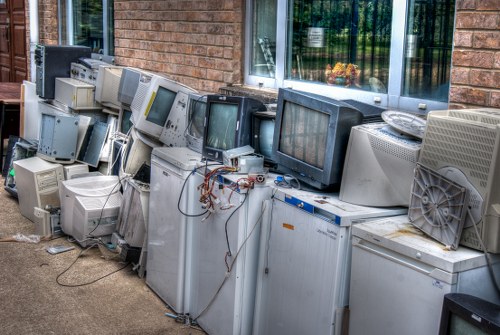
Office clearance is often about handling items with different levels of sensitivity. Older computers, monitors, printers, routers and peripheral equipment need careful separation from general furniture because they are not all treated the same way. We also recognise that many offices contain papers, binders, archived files and boxed documents that may need to be identified before removal. A good clearance keeps the process orderly so that items intended for disposal do not get mixed with materials that should be retained or reviewed first.
Some offices have storage cupboards, shelves or archive rooms full of mixed contents. In those spaces, it is usually better to sort by category rather than empty everything blindly. That may mean separating paper records from stationery, packaging, display materials and obsolete office equipment. It can also mean distinguishing bulky items that require two-person lifting from lighter contents that can be moved more quickly. Clear sorting makes the overall clearance easier to manage and helps reduce unnecessary handling.
When preparing an enquiry, it is useful to note whether any contents need to be left in place until they have been checked internally. You do not need to document every single item, but a general description of the storage and equipment involved is helpful. If you want a wider view of what we handle, our office clearance service page gives a focused overview of the main work. You can then decide how much of the space needs to be included in the quotation request.
How the clearance is planned
Good planning is central to an office clearance because access, item volume and the order of work all affect how smoothly the job runs. Before removal begins, it helps to identify which areas are being cleared, whether lifts or stairways are involved, and whether the work needs to avoid busy times in shared buildings. These practical details let the clearance be organised in a way that suits the premises rather than forcing the premises to suit the clearance.
There are also sensible choices to make about sequencing. For example, a reception area may need to be cleared separately from storage, or a meeting room may be removed after desks and workstations have gone. That can make the process cleaner and easier to track. It also helps when different item groups are heading to different destinations, such as reuse, recycling or general disposal. Planning is not about adding complexity; it is about reducing it.
Where a business is moving, closing or consolidating space, it is often useful to think in terms of zones. That means identifying one area for furniture, another for electrical items and another for boxes or file storage. It is also worth confirming any items that should not be touched. If you would like to compare related clearance options, business waste removal may be useful for mixed commercial waste outside the office environment. The right service choice depends on what needs removing and how the contents are arranged.
Recycling, reuse and disposal routes
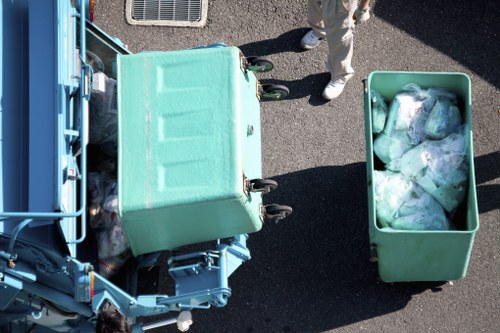
Not every office item should take the same route once it leaves the premises. Reusable furniture may be suitable for separate handling, while damaged chairs, broken fittings or mixed waste have different disposal requirements. We work with the practical differences between these categories so that the clearance is not treated as one undifferentiated load. That helps keep the work organised and supports a more responsible outcome for the contents being removed.
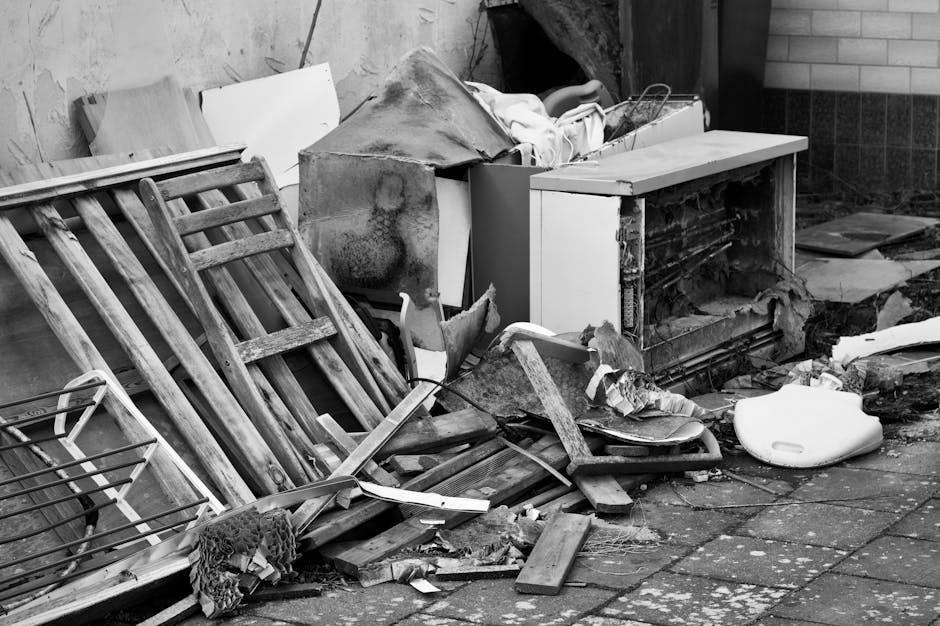
Office clearances often include items that are bulky but still structurally sound, such as desks, cupboards or meeting tables. These may be suitable for separate collection from broken materials and mixed rubbish. In contrast, loose packaging, worn textiles, damaged fixtures and general office waste usually need a different route. It is helpful when the clearance plan reflects those differences from the start, rather than trying to sort everything at the kerbside or after the job has already become untidy.
For clients who want a broader view of item handling, our recycling and sustainability page sets out the general approach to materials and diversion. In some offices, that may sit alongside furniture removals or leftover waste from a closure. If the work also includes items from a domestic room or home office setting, you may find flat clearance a relevant reference point for mixed household contents. The key is matching the service to the actual contents, not just the room label.
Access, lifting and on-site organisation
Office clearance work is usually easiest when access has been thought through in advance. That includes doors, corridors, lifts, stairs and any parking or loading restrictions that may affect how items move out of the building. Large desks or cabinets may need to be dismantled or carried in sections, while boxed materials and smaller pieces can often be moved more directly. The clearer the access plan, the simpler the removal stage tends to be.
On site, it helps to work in a sequence that keeps pathways usable and reduces clutter as the clearance progresses. That might mean moving larger items first, then handling mixed contents, and finishing with smaller leftover materials. In a shared building, the order of removal can make a noticeable difference to day-to-day convenience for other occupants. It is also useful when the final sweep needs to leave the space ready for handover, refurbishment or further inspection.
Preparation does not have to be complicated. A brief note about access, floor level and any restrictions is usually enough to start a sensible conversation. If there are useful records to keep, move them aside before the main clearance begins. For offices with heavier furnishing or linked room contents, furniture clearance can also be a helpful option to consider. If you are ready to go further, ask for a quotation and we can discuss the practical details.
Related clearance services for mixed premises
Some commercial properties need more than one type of clearance at the same time, particularly where storage rooms, back offices, staff areas and separate workspaces all contain different materials. In those cases, it helps to distinguish between office furniture, general waste and building-related materials. That way the work can be structured properly instead of being handled as a single undifferentiated job. It also gives you more control over the order in which rooms are emptied.
We also handle other clearance categories that can sit alongside office work when the premises include broader contents. A garage, store room or archive area may contain mixed items that need a different approach from desks and computers. Similarly, if a business is moving out of a property that contains furniture in several rooms, a more comprehensive clearance can be more efficient than scheduling each area separately. The right combination depends on the contents and the layout.
For a closely related domestic-style clearance, home clearance may be relevant where the premises include living spaces as well as offices. And if the work is centred on a single room or compact set of furnishings, garage clearance can offer a useful comparison for the handling of mixed stored items. A clear description of the space usually makes it easier to decide which service page reflects the job best.
About New Cross

New Cross is a district in south-east London within the London Borough of Lewisham, known for its position close to the boundary with Southwark and for its long connection to transport, education and urban life in the inner city. The area takes its name from a historic crossroads and has grown into a busy locality shaped by rail links, dense housing and a strong mix of routes into the wider capital. New Cross Gate and New Cross stations form part of that transport identity, giving the district a direct connection to the surrounding network and making it a recognisable point on the map for daily movement across south-east London.
The area has a varied architectural character, with streets of terraced housing sitting alongside later commercial and institutional buildings. Goldsmiths, University of London has a major presence in New Cross and contributes to the neighbourhood’s cultural life, particularly through arts, performance and student activity. Nearby, the boundaries with Deptford, Brockley and Peckham help place New Cross within a wider urban patchwork rather than as an isolated centre. The district is also associated with a strong local identity that has developed through music, creative activity and community life over many decades. Telegraph Hill, close by, offers one of the better-known green spaces in the wider area, with views, gardens and a sense of relief from the surrounding streets. New Cross remains a place shaped by movement, education and residential density, yet it also carries traces of older road patterns and historical settlement that continue to influence how the area reads today.
Clearance for moves, closures and fit-outs
Office clearance is often part of a larger change: a relocation, a lease end, a refurbishment or a reduction in occupied space. In each case, the main aim is to remove what is no longer needed while keeping the process ordered. That may involve emptying workstations, clearing storage, removing worn furniture or preparing a room for the next stage of use. A structured clearance can be especially useful when deadlines are tight and the premises need to be handed over in a clean, workable state.
For fit-outs and office changes, it is often sensible to remove items in a sequence that matches the programme of work. Old furniture may go first, then redundant equipment and finally smaller leftover materials. Where different categories need different handling, the clearance can be divided accordingly. We take a practical view of what needs to go and in what order, which helps the space become usable more quickly and keeps the process easy to follow.
If the job includes building-related debris as well as office contents, it may be worth comparing the work with builders waste clearance. That is especially relevant when a refit has left packaging, offcuts or materials that are not part of the office inventory itself. For a more general service across a wider range of unwanted items, waste removal provides another useful reference point. Choose the option that reflects the actual mixture of contents, not just the timetable for the job.
What to include when you ask for a quotation

To request a quotation for office clearance in New Cross, it helps to give a plain description of the space and the items involved. The most useful information usually includes the number of rooms, the main categories of furniture, whether there are archive files or boxed contents, and whether the property has lift, stair or loading restrictions. That is usually enough for a sensible first discussion without turning the enquiry into a long inventory.
It can also help to note whether the clearance is a one-off job or part of a staged removal. If some items must remain on site, say so clearly. If the office is in a shared building, mention any access rules that may affect timing or the removal route. Concise details make it easier to match the work to the premises, and they help keep the quotation focused on the real scope of the job rather than assumptions. A short summary is often better than a long, unfocused explanation.
When you are ready, ask for a quotation and outline the clearance in simple terms. If you need a related option for premises storage or mixed room contents, loft clearance may be useful where the contents are kept overhead or in hard-to-access storage space. For the office itself, the next step is straightforward: tell us what needs clearing, and we can discuss the work in practical terms.
Office clearance carried out with care
Good office clearance is not just about taking items away; it is about handling the whole space sensibly from first sort to final removal. That includes furniture, equipment, records, loose materials and anything else left behind after a move, closure or refresh. When the work is organised well, the result is a clear and usable space with less disruption than an unmanaged clear-out would cause. It also helps you make decisions about what stays, what moves and what is no longer needed.
Our approach is designed to keep the work practical, orderly and suited to the actual contents on site. Whether the office contains a few redundant desks or a full set of mixed contents across several rooms, the same basic principles apply: identify the items, choose the right removal route and carry out the job in a sensible sequence. If there are special items or mixed spaces involved, those can be discussed as part of the quotation.
For a quotation, tell us what needs removing and what kind of access is available, then let us help you plan the clearance. You can also look at contact us when you are ready to begin the conversation about your office clearance in New Cross.